Sustainable Aviation Fuel (SAF)
Lighthouse Green Fuels (LGF) is developing the UK’s first commercial-scale second-generation SAF facility: converting over 1.5 million tonnes of sustainably-sourced biomass into 180 million litres of SAF each year, alongside 30 million litres of renewable naphtha for use in the chemical industry.
Fully funded with FEED complete, LGF is set to be the UK's only commercial-scale second-generation SAF plant. Designed with integrated carbon capture, the facility has the potential to enable carbon-negative flight.
Interested in working with LGF?
What Is Sustainable Aviation Fuel (SAF)?
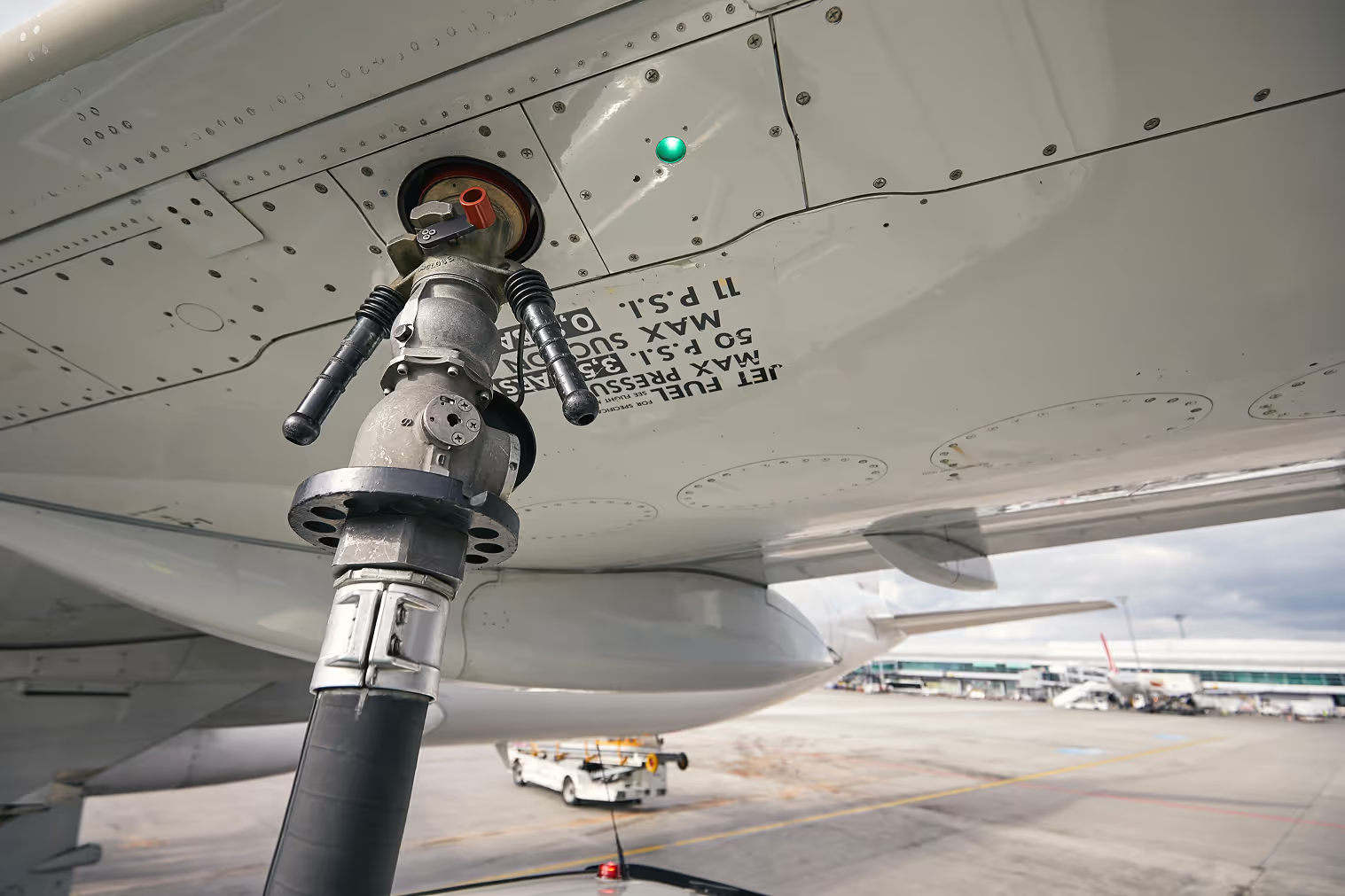
SAF is a drop-in replacement for fossil jet fuel, made from renewable or biogenic sources. It works seamlessly with today’s aircraft and refuelling systems: cutting lifecycle greenhouse-gas emissions by around 80% compared with fossil kerosene.
Aviation accounts for roughly 2–3 % of global CO₂ emissions. Unlike road transport, there’s no near-term substitute for liquid jet fuel at scale - which makes SAF the most immediate, scalable solution for reducing aviation’s climate impact this decade.
All SAF used in commercial aviation must meet strict international fuel and sustainability standards - including ASTM certification and compliance with the UK SAF Mandate - ensuring safety, traceability and verified emissions performance.
Next-Generation SAF: Beyond HEFA
Why LGF’s Gasification and Fischer–Tropsch Route with Carbon Capture Sets a New Benchmark
Not all SAF pathways are created equal. Early deployment focuses on HEFA-based fuels from waste oils proving SAF is technically feasible - but limited supply highlights the need for next-gen solutions like LGF.
LGF’s advantage: we use advanced gasification and Fischer–Tropsch synthesis that can be integrated with carbon capture to create a second-generation, non-competing, scalable, and potentially carbon-negative fuel pathway. This positions LGF at the forefront of the next phase of SAF expansion.
Feedstock Supply: From Waste and Residues to SAF
LGF’s will use sustainably-sourced biomass as its feedstock. These include forestry, sawmill and agricultural residues - all meeting strict sustainability criteria.
No material is sourced from old growth forests or commercially productive wood sources.
By turning low-value biomass into high-value energy, we unlock circular-economy benefits and keep carbon in productive use.
Our Approach to Sustainability
All biomass feedstock used at LGF is certified under recognised sustainability schemes such as ISCC, FSC, or equivalent, and meets UK Government criteria for renewable fuels, including full traceability and lifecycle carbon accounting.
LGF uses certified residues and by-products only. We do not use old growth forest materials, purpose-grown energy crops, or feedstock diverted from food, farming, or construction.

Types of Feedstock We Use
- Forestry residues and sawmill by-products like low-grade or damaged timber, bark and offcuts
- Agricultural residues such as sugarcane bagasse, sunflower husks and peanut shells
- Waste wood from construction, demolition, and recycling which will be used for on-site power
- Potentially other approved biogenic waste and residues compliant with the SAF Mandate
Lighthouse Green Fuels: The UK’s Most Advanced SAF Project
- Funding: £32 million in funding secured from UK Government
- Status: Fully funded to FID
- Technology: Advanced gasification + Fischer–Tropsch synthesis
- Products: 180 million litres SAF + 30 million litres green naphtha per year
- Performance: ~350,000 tCO₂ avoided annually; ~750,000 tCO₂ with CCS
- Location: Seal Sands, Teesside - an industrial site for co-located SAF production
Frequently Asked Questions About SAF and the LGF Project
HEFA SAF is produced from fats and oils, such as used cooking oil, using established refining processes. Second-generation SAF is made from biogenic waste and residues, such as sustainably-sourced biomass, and uses advanced conversion technologies. This avoids competition with food supply, offers greater feedstock scalability, and delivers higher lifecycle emissions savings.
Certified SAF can currently be blended up to 50% with fossil jet fuel with testing for 100% drop-in SAF ongoing.
Yes. Only non-competing biogenic wastes and residues are used, as per the sustainability criteria in the UK SAF Mandate, avoiding any competition with food crops.
Initially yes, However, policy mechanisms such as the Mandate, Revenue Certainty Mechanism and carbon certificates help close this gap by recognising SAF's carbon and system-wide benefits.
Integration with Teesside’s planned CCS network means more CO₂ is captured than emitted over the fuel’s lifecycle.
Get in Touch
Questions about the Lighthouse Green Fuels project? We’re happy to help.